
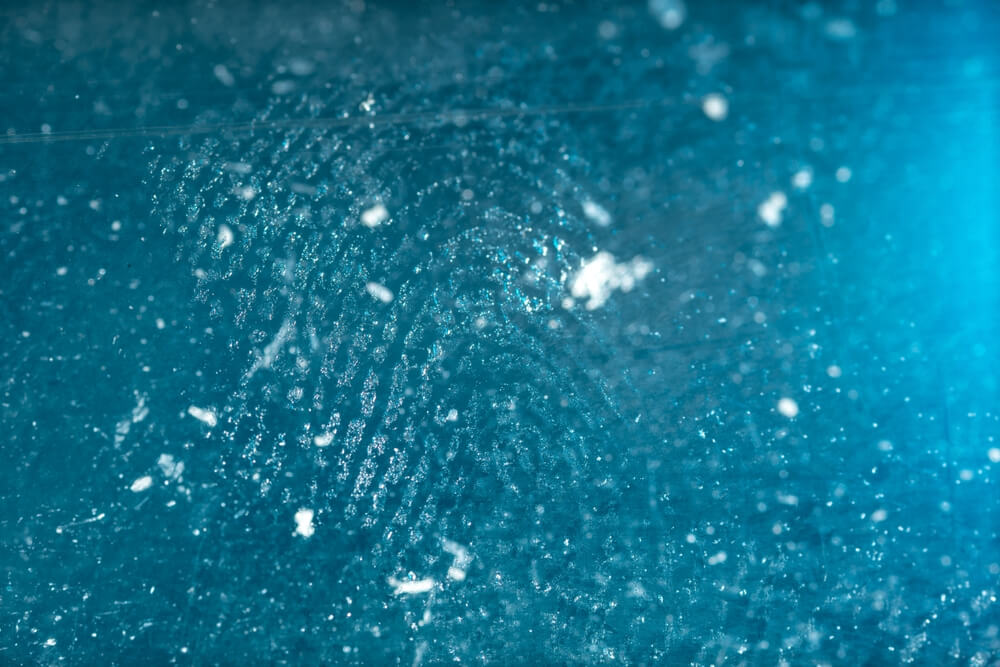
The Role of Forensic Evidence in Virginia Criminal Defense Cases
Forensic evidence in Virginia criminal defense cases often carries more weight with jurors than any eyewitness, yet a lab result is only as reliable as the people and procedures behind it. Virginia law gives the accused real tools to test that evidence, from strict notice deadlines to the right to cross-examine the analyst who ran the test. Many people first encounter the science in their own case when a certificate of analysis arrives weeks before a hearing in Bedford County Circuit Court. The document looks official and final. It is neither.
What Counts as Forensic Evidence in a Virginia Criminal Case?
Forensic evidence is physical or digital material analyzed with scientific methods to connect a person to a crime or rule them out. In Virginia criminal cases, it commonly includes DNA, fingerprints, firearms and toolmark comparisons, drug analysis, blood alcohol results, toxicology, and data extracted from phones and computers. Each type carries its own weaknesses.
The term covers far more than the DNA swabs familiar from television. Almost any criminal charge can involve some form of scientific testing, and the type of analysis usually tracks the type of accusation. A DUI case may turn on a blood test, while a burglary case may depend on a partial fingerprint lifted from a window frame.
The most common categories of forensic evidence in Virginia prosecutions include:
- DNA and Biological Evidence: Blood, saliva, skin cells, and other body fluids compared against a known profile or searched in a database. This evidence appears frequently in sexual assault, homicide, and burglary investigations.
- Fingerprints and Impressions: Latent prints recovered from surfaces, along with shoe and tire impressions left at a scene.
- Firearms and Toolmarks: Comparisons of bullets and cartridge cases to a particular weapon, or of pry marks to a particular tool.
- Drug Analysis: Laboratory identification of suspected controlled substances seized during a search or arrest.
- Toxicology and Blood Alcohol: Blood and breath results that are central to DUI prosecutions and relevant in some assault and homicide cases.
- Digital Forensics: Data recovered from phones, computers, and other devices, including location records and deleted messages.
Each category rests on different science. Modern DNA profiling is grounded in extensive research, while some pattern comparison methods depend heavily on an examiner’s visual judgment. That difference matters when the defense decides where to focus its challenge, because a technique with a weaker scientific foundation is often easier to question in front of a judge or jury.
Who Analyzes Forensic Evidence in Virginia?
Most forensic testing in Virginia criminal cases is performed by the Virginia Department of Forensic Science, a state agency with regional laboratories in central Virginia, Manassas, Norfolk, and Roanoke. Evidence from Bedford County, Lynchburg, and the Roanoke Valley is often handled by the Western Laboratory in Roanoke, whose analysts may later testify at trial.
The Virginia Department of Forensic Science is responsible for most criminal casework in the Commonwealth. Its analysts identify drugs, develop DNA profiles, compare fingerprints and firearms evidence, and prepare the certificates of analysis that prosecutors rely on at trial. When a case goes to a hearing, those same analysts may be called to the witness stand to explain their work and answer the defense’s questions.
The department’s Western Laboratory on Northside High School Road in Roanoke holds accreditation under the international ISO/IEC 17025 standard and the FBI’s quality assurance standards for forensic DNA testing laboratories. Its accredited work includes DNA profiling, body fluid identification, fire debris analysis, and firearms and toolmark examination.
Accreditation is meaningful, but it does not guarantee that every test in every case was performed correctly. An accreditation review examines a laboratory’s systems. It does not re-examine the specific swab, pill, or cartridge case in your file. That review is the defense’s job, and it usually starts by requesting the underlying lab records rather than relying on the one-page summary the Commonwealth provides.
Is DNA Evidence Automatically Admissible in Virginia Courts?
Virginia law treats DNA testing as a reliable scientific technique, so prosecutors do not have to prove the underlying science. The defense can still challenge how a specific sample was collected, handled, and analyzed. The party offering DNA results must give written notice at least 21 days before the proceeding.
Under Va. Code § 19.2-270.5, the General Assembly has declared DNA testing reliable for the purpose of proving or disproving a person’s identity. In practical terms, the defense generally cannot win a pretrial fight by arguing that DNA science as a whole is unproven. The statute, however, expressly preserves the right to introduce evidence about the accuracy and reliability of the procedures used to collect and analyze the particular sample in your case.
That distinction is where most DNA defense work happens. The technique may be sound while its application in one investigation was flawed. The statute also directs the court to consider other admissible evidence of the accused’s identity regardless of the DNA results, so a lab report does not end the inquiry on its own.
The notice rules carry real consequences. The party planning to offer DNA results must notify the other side in writing at least 21 days before the proceeding and provide or make available copies of the report. If the defense intends to object to admissibility, it must give written notice of the objection and its grounds at least 10 days before the proceeding. When the required notice is not given, the court may grant a continuance or, in appropriate circumstances, bar the evidence entirely.
What DNA Problems Can the Defense Raise?
DNA challenges typically focus on how a result was produced and what it actually means. Common areas of inquiry include:
- Mixed Samples: Evidence containing DNA from more than one person can be difficult to interpret, and conclusions about who contributed may depend on analyst judgment and software settings.
- Low-Level or Degraded Samples: Very small or deteriorated samples may produce partial profiles that carry less weight than a complete one.
- Transfer: DNA can move from one person or object to another through ordinary contact, so its presence on an item does not always show how or when it got there.
- Statistical Presentation: The way a match probability is described to jurors can suggest more certainty than the numbers support.
Can Prosecutors Use a Lab Report Without the Analyst Testifying?
Not if the defense objects on time. Under Va. Code § 19.2-187.1, prosecutors must provide a certificate of analysis at least 28 days before trial, and the defense has 14 days after it is filed to object in writing. After a timely objection, the analyst generally must testify and face cross-examination unless the objection is waived.
A certificate of analysis is the lab’s written summary of its findings. Virginia law allows the Commonwealth to offer that document in place of live testimony, but only if it follows the procedure in Va. Code § 19.2-187.1. The prosecution must send the certificate to defense counsel at no charge no later than 28 days before the hearing or trial, include a notice explaining the right to object, and file a copy with the clerk of court.
The defense then has a short window to act. A written objection must be filed within 14 days after the certificate and notice were filed with the clerk, or the objection is deemed waived. Once a timely objection is made, the certificate cannot come in unless the analyst testifies during the Commonwealth’s case-in-chief and is subject to cross-examination, the defense waives the objection, or the parties stipulate to admissibility.
Several related provisions of the statute can shape defense strategy:
- Video Testimony: If the Commonwealth wants the analyst to testify by two-way video, it must say so in a separate written notice, and the defense may object.
- Court Costs: If the accused demands the analyst’s presence and is later found guilty of that charge, $50 in witness expenses is assessed as court costs.
- Continuances: If the analyst is unavailable despite the Commonwealth’s due diligence, the court must grant a continuance, capped at 90 days total for a defendant held continuously in custody and 180 days for one who is not.
- Chain of Custody Witnesses: The accused may call the analyst or anyone involved in the chain of custody and question them as adverse witnesses, with the witness summoned at the Commonwealth’s cost.
Whether to demand live testimony is a strategic judgment. In many cases, bringing the analyst into the courtroom opens the door to questions about methods, controls, and interpretation that the certificate never mentions.
What Forensic Evidence Must the Commonwealth Share With the Defense?
In felony cases in circuit court, Rule 3A:11 lets the defense obtain written reports of autopsies, ballistics, fingerprint and handwriting analyses, blood, urine, and breath tests, and other scientific reports. Prosecutors must also disclose expert opinions and qualifications. The Commonwealth’s duty to share evidence favorable to the accused applies regardless of discovery limits.
Virginia’s criminal discovery rule, Rule 3A:11, applies to felony prosecutions in circuit court and to misdemeanors brought on direct indictment. Upon a written motion by the accused, the court must order the Commonwealth’s attorney to permit inspection and copying of relevant scientific reports made in connection with the case that are within the Commonwealth’s possession, custody, or control.
The rule also requires the prosecution to give written notice if it intends to introduce expert opinion testimony at trial or sentencing. That notice must include the expert’s written report, or a written summary of the expected opinions and the bases and reasons for them, along with the expert’s qualifications and contact information. A signed certificate of analysis from the Department of Forensic Science satisfies this requirement, which is one reason defense attorneys often seek additional records behind the certificate.
Timing matters. The defense motion must be made at least 10 calendar days before the day fixed for trial. Discovery rights are generally more limited while a felony charge is pending in general district court, so the full scope of forensic discovery usually becomes available once the case reaches circuit court.
Rule 3A:11 also confirms that the Commonwealth’s constitutional and statutory duties to disclose exculpatory and impeachment evidence override any limitation in the rule itself. If testing produced results that help the accused, the obligation to disclose them does not depend on the boundaries of a discovery motion.
How Can a Defense Attorney Challenge Forensic Evidence in a Virginia Criminal Case?
Defense attorneys challenge forensic evidence by examining how it was collected, stored, tested, and interpreted. Common issues include chain of custody gaps, contamination, departures from lab protocols, mixed or degraded DNA samples, overstated statistical conclusions, and analyst qualifications. Cross-examination and independent expert review can expose weaknesses a jury would otherwise never hear.
Effective challenges rarely attack science in the abstract. They focus on the specific evidence in the case and trace it from the scene to the witness stand. Key areas of review include:
- Collection at the Scene: How investigators gathered, packaged, and labeled the evidence, and whether they took steps to prevent contamination.
- Chain of Custody: Whether records account for every person who handled the evidence and every place it was stored between collection and testing.
- Laboratory Procedures: Whether the analyst followed the lab’s written protocols, ran appropriate controls, and documented any deviations.
- Interpretation: Whether the conclusions in the report go further than the data allow, particularly for mixed DNA samples or pattern comparisons.
- Analyst Qualifications: The analyst’s training, experience, and proficiency testing in the specific discipline at issue.
Much of this work happens before trial through discovery requests and careful review of bench notes, data files, and chain of custody documentation. The rest happens in the courtroom through cross-examination, where the analyst must answer questions about what was done and what was not.
A defense team that includes a former prosecutor brings a useful perspective to that process. An attorney who has presented forensic evidence on behalf of the Commonwealth understands how that evidence is typically prepared for trial and which parts of the process tend to receive the least attention.
Contact Pack Law Group for A Confidential Criminal Defense Consultation
When forensic evidence is part of the case against you, the time to examine it is well before trial. The deadlines to object to a certificate of analysis or to DNA evidence can pass within weeks of receiving notice, and a missed objection may be waived. The attorneys at Pack Law Group understand how forensic evidence in Virginia criminal defense cases is built and where it can be tested. Our team includes a former prosecutor for the Commonwealth who knows how forensic proof is prepared and presented. We represent people facing misdemeanor and felony charges in Bedford, Lynchburg, Forest, and throughout the Roanoke Valley.
Call our office today or contact us online to schedule a confidential consultation and learn how we can help you respond to the evidence in your case.
Frequently Asked Questions
Can forensic evidence alone lead to a conviction in Virginia?
The prosecution must prove every element of a charge beyond a reasonable doubt, and forensic evidence is only one part of that proof. For DNA specifically, Virginia law directs the court to consider other admissible evidence of identity regardless of the DNA results. How much weight a judge or jury gives any lab finding depends on the rest of the evidence and on how thoroughly the defense tests it.
What happens if I demand that the lab analyst testify and I am convicted?
Under Va. Code § 19.2-187.1, if you demand the analyst’s presence and are then found guilty of the charge, $50 in witness expenses is charged to you as court costs. The Commonwealth otherwise bears the cost of summoning the analyst. Your attorney can help you weigh that modest cost against the value of cross-examining the person who performed the test.
Can a forensic analyst testify against me by video?
In some situations, yes. If the Commonwealth intends to present an analyst’s testimony by two-way video, Virginia law requires a separate written notice telling you so and explaining your right to object. A timely written objection generally allows you to require the analyst’s in-person testimony, subject to the statute’s other provisions.
How long does Virginia’s crime lab take to test evidence?
Testing timelines vary by the type of analysis, the laboratory, and current caseloads. The Department of Forensic Science publishes workload information and a case statistics dashboard on its website. Lab delays can affect when a case is ready for trial, and when an analyst is unavailable, Virginia law limits how long a court may continue the case for that reason.
Do I get copies of forensic reports if my case is in general district court?
Rule 3A:11, Virginia’s broader criminal discovery rule, applies to felony prosecutions in circuit court and misdemeanors brought on direct indictment. Discovery in general district court is typically narrower. However, if the Commonwealth plans to use a certificate of analysis in place of live testimony at trial, the notice requirements of Va. Code § 19.2-187.1 still apply.
Can DNA evidence be preserved after a conviction?
Yes. Virginia law allows courts to order the storage and preservation of human biological evidence in felony cases, which can matter years later if new testing becomes possible. A person convicted of a felony may also ask the convicting court for new scientific testing under Va. Code § 19.2-327.1 when the statute’s conditions are met.



Leave a Reply
Want to join the discussion?Feel free to contribute!